
Most WordPress site owners hit the same wall eventually. You know you need more content. Your keyword research shows dozens of articles you should write. But between managing the site, handling clients, and running an actual business, consistent publishing feels impossible.
Hiring writers helps, but good writers are expensive, slow to onboard, and hard to scale. A content agency can cost $5,000-15,000 per month for serious volume. Even then, you're managing briefs, edits, revisions, and publication schedules like a second job.
WordPress SEO automation is a real alternative now. Not the crude "spin content and hope" approaches that burned sites in 2015, but genuine AI-generated articles that go through humanization, match your brand voice, and publish on a schedule you control.
Here's how it actually works in 2026.
Why WordPress is the right platform for content automation
WordPress handles more than 40% of the web for a reason: the plugin ecosystem and REST API make it far more integration-friendly than most CMS platforms. When you're setting up automated content publishing, that matters.
A well-integrated AI content tool can:
- Generate articles from your keyword list
- Apply your preferred post template (categories, tags, author, featured image)
- Schedule posts across weeks or months
- Publish directly without any copy-paste workflow
The alternative is manually downloading content, formatting it in WordPress, adding metadata, setting featured images, and hitting publish. Multiply that by 20 articles a month and you've burned two full working days on mechanical tasks.
How WordPress SEO automation works
The process has three distinct phases, and understanding each one helps you set realistic expectations.
Phase 1: content generation
You start with a list of target keywords or topics. The AI model takes each one and generates a full article, typically between 1,000 and 2,500 words. Better platforms let you choose your AI model based on your needs: a budget model for high-volume supporting content, a more capable model for cornerstone articles.
This is where model selection actually matters. A long-tail informational query ("how to add schema markup to wordpress without a plugin") needs a different approach than a competitive commercial keyword ("best wordpress hosting for agencies"). Good tools let you match the model to the job.
Phase 2: humanization
Raw AI output is detectable. Not necessarily by Google - they've stated clearly they care about quality, not source - but by readers. There's a flatness to unedited AI text. Sentences follow the same rhythm. Transitions feel mechanical. The prose reads like a Wikipedia article written by a very diligent but slightly bored intern.
Humanization fixes this. The content goes through a secondary pass that varies sentence structure, adjusts pacing, removes AI vocabulary patterns, and makes the writing feel like it was written by a person who actually cares about the topic.
With AutopilotRank, humanization is built in. Every article runs through the humanizer before it's queued for publishing. You're not paying for a separate tool or doing manual editing passes to make AI content readable.
Ready to try AutopilotRank? Start free and see the workflow for yourself.
Phase 3: scheduled publishing
Once content is approved, it goes into a publishing queue. You decide the cadence: 3 articles per week, 5, daily. The posts go live according to your schedule without you touching anything.
This is the part that changes the economics. You can set up a month of content in an afternoon, then walk away. The site keeps publishing while you focus on other work.
Setting up WordPress automation with AutopilotRank
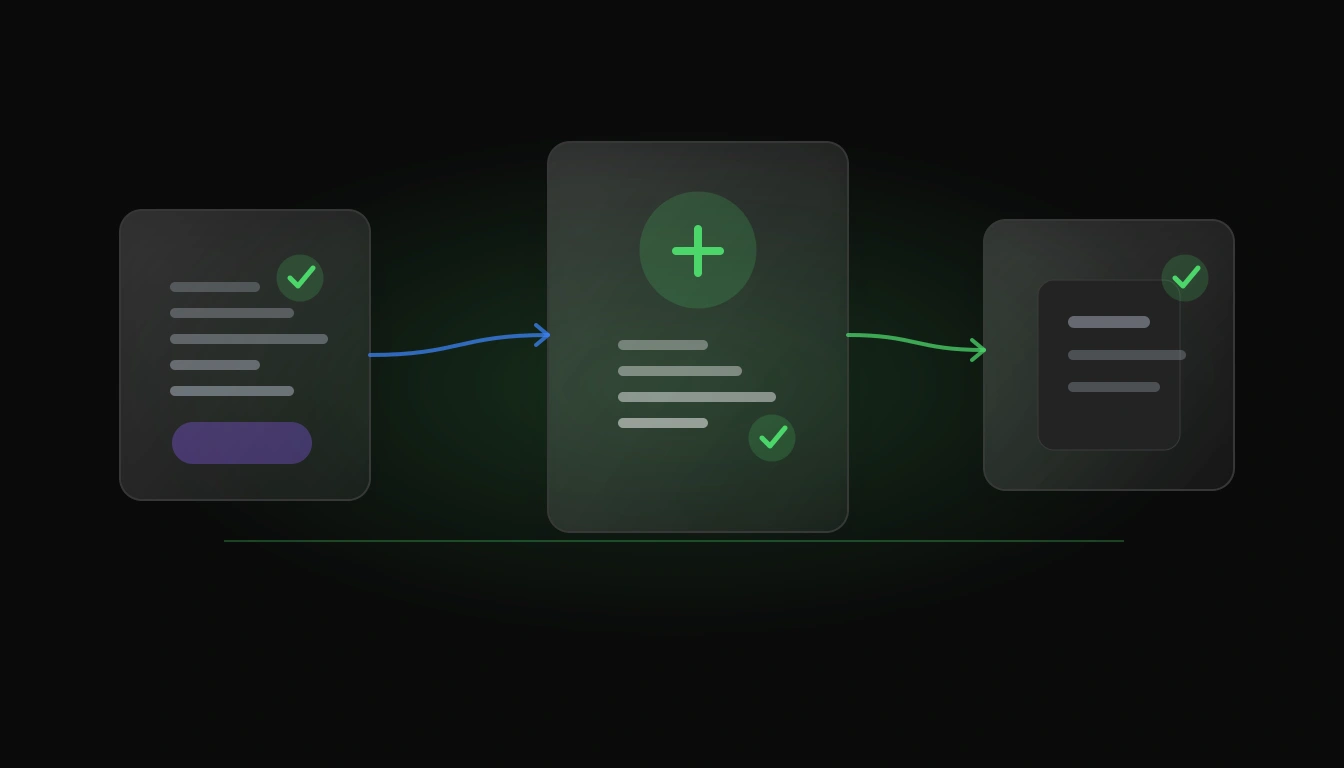
Here's what the actual setup looks like.
Step 1: Connect your WordPress site
AutopilotRank connects to WordPress via the REST API. You generate an application password in your WordPress admin panel (Users > Profile > Application Passwords), paste it into AutopilotRank, and the connection is live. No plugin installation required.
Step 2: Import your keyword list
You can paste in keywords directly, import a CSV, or use AutopilotRank's keyword research tools to find opportunities. If you've connected Google Search Console, the platform will surface keywords you're ranking for but haven't fully targeted with dedicated content.
Step 3: Configure your content settings
Set your preferences for:
- Article length (short 800-1000w, standard 1200-1500w, comprehensive 2000w+)
- AI model (budget, balanced, pro, ultra)
- Writing tone (informational, conversational, authoritative)
- Internal linking rules
- Category and tag assignments
Step 4: Review and queue
Generated articles appear in your dashboard for review. You can read through, make edits, approve, or reject. Once approved, articles go into the publishing queue with your chosen schedule.
Step 5: Set your publishing schedule
Choose your publishing frequency and the queue runs automatically. You get notified when articles go live, and the performance tracking in the dashboard shows how each one is doing in search.
What this actually saves you
Let's look at the math for a site publishing 20 articles per month.
Manual approach:
- Brief writing: 30 min per article = 10 hours
- Writing or coordinating with writers: 3-5 hours per article = 60-100 hours
- Editing and QA: 1 hour per article = 20 hours
- WordPress formatting and publishing: 20 min per article = 6.7 hours
- Total: roughly 97-137 hours per month
Automated approach:
- Keyword setup and configuration: 2 hours (one-time)
- Content review and approval: 15-20 min per article = 5-7 hours
- Occasional edits for brand voice: 15 min per article = 5 hours
- Total: roughly 12-14 hours per month
That's the difference between content being a part-time job and something you do in a couple of afternoons.
The cost comparison is even more stark. A freelance writer doing 1,200-word SEO articles typically charges $80-200 per piece. At 20 articles per month, that's $1,600-4,000 plus your time managing them. AutopilotRank's Growth plan includes a monthly credit allowance; see the pricing page for the current price and credit amount.
Maintaining quality at scale
Automation doesn't mean abandoning editorial standards. The sites that see the best results from AI content treat it as a system, not a shortcut.
A few things that actually matter:
Review everything before it goes live. This sounds obvious but it's where most people cut corners. A 15-minute read of an article catches factual errors, spots places where the AI misunderstood a query, and lets you add specifics that AI can't know (your own experience, client results, product details).
Build topical clusters, not random articles. A series of related articles that link to each other performs better than the same number of disconnected posts. Plan your keyword list around topics, not just individual queries.
Update aging content. An article about "best WordPress plugins 2024" needs updating in 2026. Automated content still requires maintenance. Schedule quarterly reviews of your top-performing posts.
Keep your brand voice consistent. Use AutopilotRank's tone settings to define how formal or conversational your content should be, and stick to it. Inconsistent voice is one of the giveaways of automated content that went out the door without review.
See pricing plans - Find the right volume for your site at autopilotrank.com/pricing
How this compares to hiring writers
Writers aren't going away. For some content types - thought leadership, original research, deeply personal case studies - human writers do things AI genuinely cannot. But for the bulk of SEO content that most WordPress sites need, the question isn't AI vs. humans. It's whether you can afford to do it manually at the scale that actually moves rankings.
A site with 10 articles has thin topical coverage. Google has very little signal about what you're an authority on. A site with 150 well-organized articles on related topics is a different story.
The sites winning in competitive niches right now aren't publishing one article per week and waiting. They're building out comprehensive topical coverage faster than their competitors can match manually. Automation is how that happens.
If you're managing WordPress SEO seriously in 2026, automating the content pipeline isn't optional. It's the only way to compete on volume while keeping your time for the work that requires actual judgment.
Ready to set up automated WordPress publishing? View pricing plans to find the right volume for your site, or start free and see the workflow for yourself.
Reviewed for SEO operators

Joao Furtado
Founder & SEO Automation Specialist
Joao Furtado builds and operates SEO automation systems — from keyword research and multi-model drafting to quality scoring, CMS publishing, and Google Search Console optimization.
Articles are reviewed against real production workflows: keyword selection, draft generation, quality scoring, CMS publishing, and post-publication optimization.
Related Reading
Guides
AI Content vs Human Content for SEO: When to Use Each (2026)
Compare AI content vs human content for SEO success. Learn the strengths of each approach and when to deploy them for maximum search visibility.
8 min read
Guides
Shopify SEO Content Automation: Scale Organic Traffic
Master Shopify blog SEO automation with proven strategies. Learn how to scale content creation, optimize product pages, and drive organic traffic automatically.
7 min read
Guides
Why AI SEO Content Works in 2026
Discover why AI-generated content ranks on Google in 2026, the quality signals that matter, and why humanizers are essential for SEO success.
5 min read
Share this article